
Renters’ Reform Bill Delayed Until Autumn 2025
Posted on Sunday, 10 August, 2025
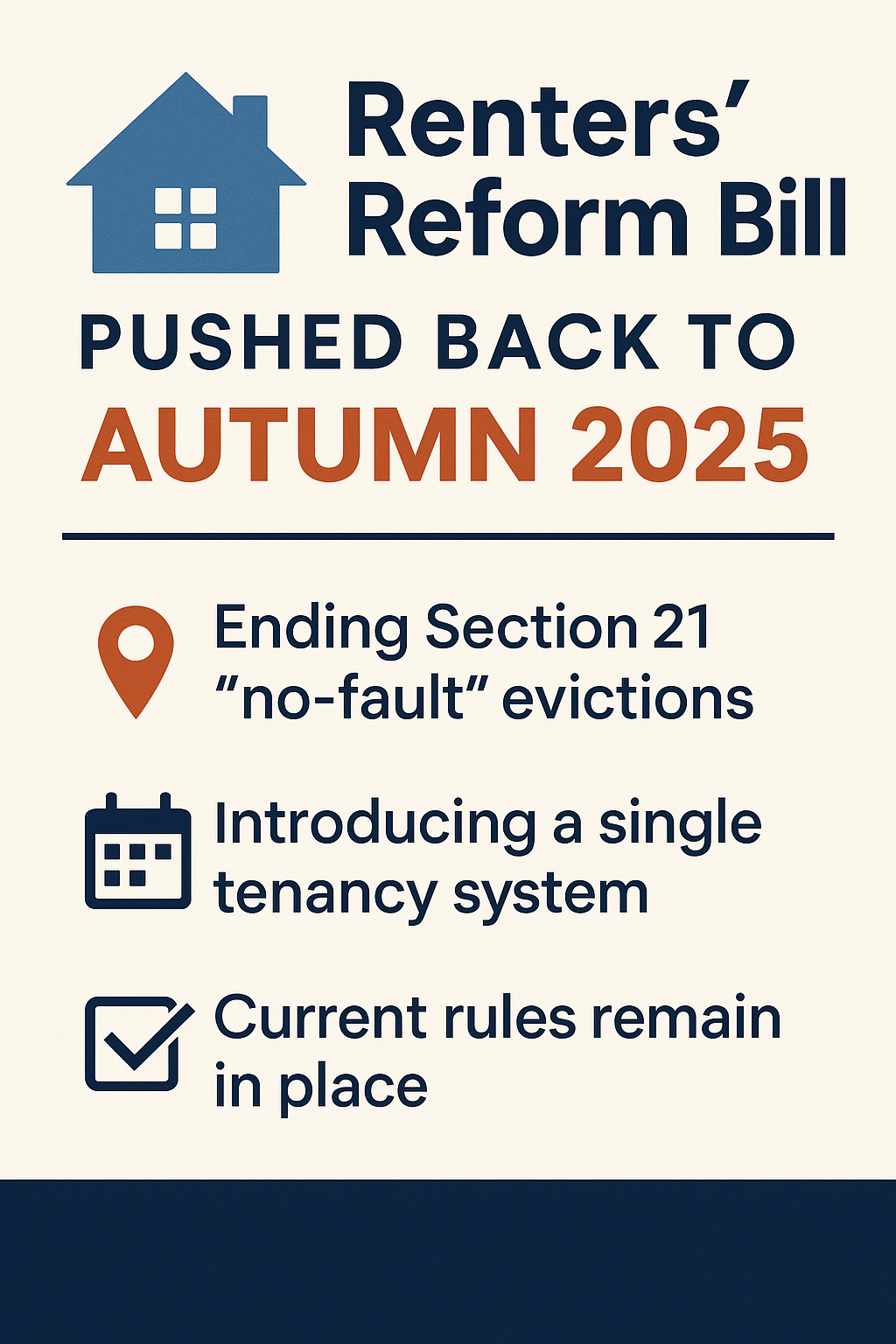
The long-awaited Renters’ Reform Bill, aimed at overhauling the private rental sector in England, has been delayed until at least autumn 2025. The legislation—designed to improve security and standards for tenants while creating a fairer system for landlords—was originally expected to receive Royal Assent in summer 2025. However, a congested parliamentary timetable has pushed it back.
What Is the Renters’ Reform Bill?
The bill, also referred to as the Renters’ Rights Bill, includes major changes such as:
- Abolishing Section 21 “no-fault” evictions, meaning landlords will no longer be able to evict tenants without providing a valid reason.
- Moving all tenancies to a single periodic tenancy system, removing fixed-term contracts.
- Introducing a Private Renters’ Ombudsman to resolve disputes quickly and fairly.
- Setting new minimum property standards for rented homes.
Why the Delay?
Parliament is currently dealing with a backlog of legislation, with competing priorities including employment law reform and audit regulation. This has delayed the bill’s progress, with Royal Assent now unlikely before September 2025 and possible slippage into October after the parliamentary recess.
What It Means for Tenants
The delay means Section 21 evictions remain legal for now. Tenant campaign groups warn that thousands more households could face insecurity during this extended transition period.
What It Means for Landlords and Agents
Current rules will remain in place until the new law takes effect—expected early 2026. Landlords are advised to start preparing by reviewing tenancy agreements, property standards, and dispute resolution processes in anticipation of the reforms.
Looking Ahead
While the delay is frustrating for many, the government maintains that the reforms will still go ahead, with a clear focus on balancing the needs of tenants and landlords. For now, the private rental market continues to operate under existing legislation, and both sides should use this time to prepare for the eventual transition.